
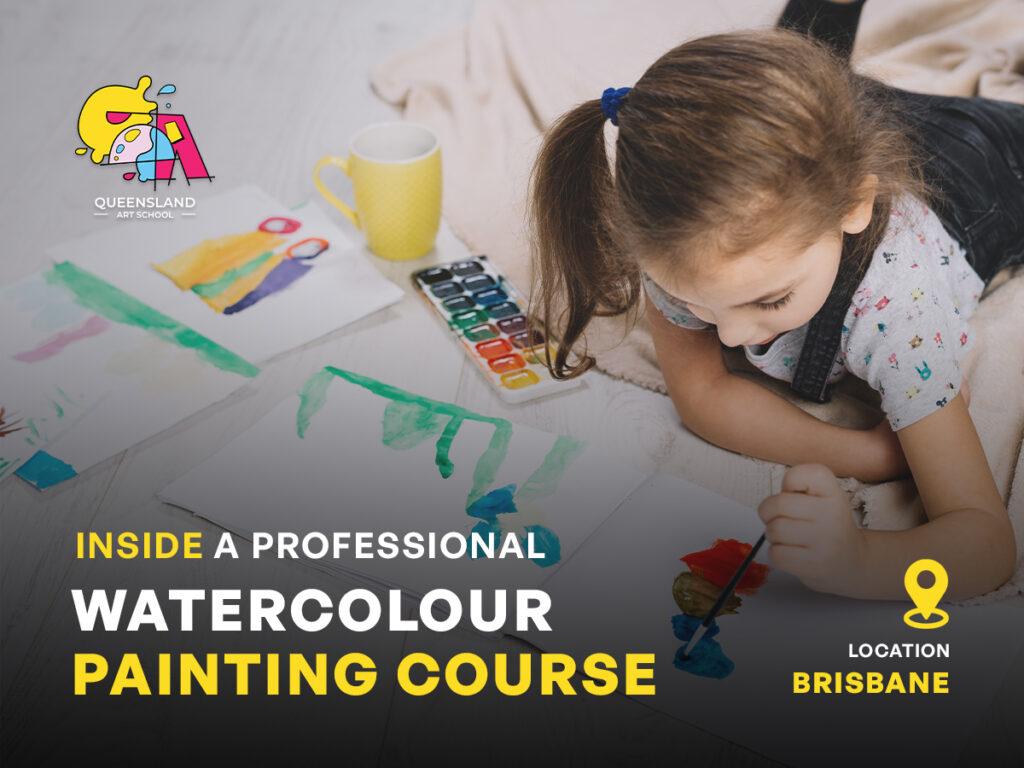
Watercolours can scare even the most experienced artists, and for good reason. You need precision, the right ratio of colour and water and the correct medium for your painting to work. You need professional training that can guide you on the basics and nuances of the art. Queensland Art School provides a watercolour painting course in Brisbane that not only develops skills and precision but also personal style and discipline.
Core Water Colour Methods You’ll Master
Wet-on-wet and Wet-on-dry Techniques
The most commonly used watercolour technique, wet-on-wet, involves applying watercolour to a wet medium or wet area. Often, painters drench the brush and create patterns on the canvas. Then they apply watercolour and let the paint spread throughout the drenched region. The techniques are useful for creating colour patterns on the medium.
The wet-on-dry technique involves applying watercolour on a dry medium used for drawing realistic images. This technique helps develop control and precision, offering well-defined lines in a painting. A watercolour painting course in Brisbane, such as Queensland Art School, teaches these techniques for developing motor control.
Glazing and Blending
Glazing, also known as layering, adds depth to your art. Since watercolour is transparent, you add layer upon layer and still see what’s underneath. Glazing with different colours seamlessly blends, creating new colours and designs. You can also let the paint dry completely and then add the new layer.
Blending is the process of defining edges during the transition of colour in a painting. In watercolour paintings, the edges are thicker than the interior. Blending helps to transition between tones and provides a 3D effect to your painting. This technique can work in wet-on-wet and wet-on-dry processes.
Composition and Visual Structure
Rule of Thirds
In the rule of thirds, you have to divide the medium into 3 x 3 with key elements. Art courses in Brisbane, such as Queensland Art School, teach this technique for placing the elements in the proper position. Instructors instruct the students to place picture elements at the intersection of those lines. This technique is taught to make your painting more dynamic, less centred, and more balanced.
Focal Point and Contrast
Focal point and contrast help to dramatise and add cinematic effect to your painting. The focal point decides the point of view and intention of the painting. Contrast is the interplay between light and darkness. Professional art courses will help you master these techniques to obtain the desired effect. Veteran instructors will teach you to adapt your focal point and contrast with the purpose and subject.
Shape Simplification
If you’re opting for watercolour painting, you need to learn shape simplification to add cohesion to your painting. Professional guidance will teach you to think in terms of large shapes, rather than small details. In watercolour, shapes seem to blend, and learning how to simplify shapes to get a well-defined picture.
Positive and Negative Space
Positive space is the subject of the painting, and negative space is the background. A balance between the two spaces is necessary to bring depth to the picture. Queensland provide watercolour art course in Brisbane to teach you the balance.
Four Pillars of Watercolour
Watercolour art courses in Brisbane, provided by Queensland Art School, also focus on the four pillars of watercolour. The pillars are colour, shape, value, and edge, which you need to master.
Studio Practice and Discipline
Studio practice through watercolour courses helps to change inspiration into a high-quality outcome. Here are some ways you can benefit from studio watercolour courses:
- Build consistency: Professional courses allow you to practice on a routine basis and develop consistency. It builds discipline for producing top-notch work without relying on inspiration.
- Improving creativity: A structured approach to your learning brings creativity. Moreover, it will teach you problem-solving and technical expertise.
- Portfolio building: Art classes and sessions will bring your skills to life and act as your portfolio. This portfolio will help you advance in your career, acting as assets.
- Confidence-building: A disciplined approach develops confidence and self-assurance due to skill development.
Conclusion
A professional watercolour art course will help to build skills and confidence to present your art to the world. With the right instructor and the environment, you can gain creativity and tackle any issues while painting with watercolour. Queensland Art School offers all these qualities in its watercolour art course in Brisbane with experienced instructors and an independent environment. The school will help you build your portfolio through small class sizes and a diverse curriculum. Visit their official website and check their full roster of classes.